The board reads the job. It does not invent a second inventory.
Planned quantities come from material lines on the accepted budget, or from the accepted estimate when the budget has none. Ordered comes from purchase orders that are not subcontracts. Delivered counts receipts in good condition.
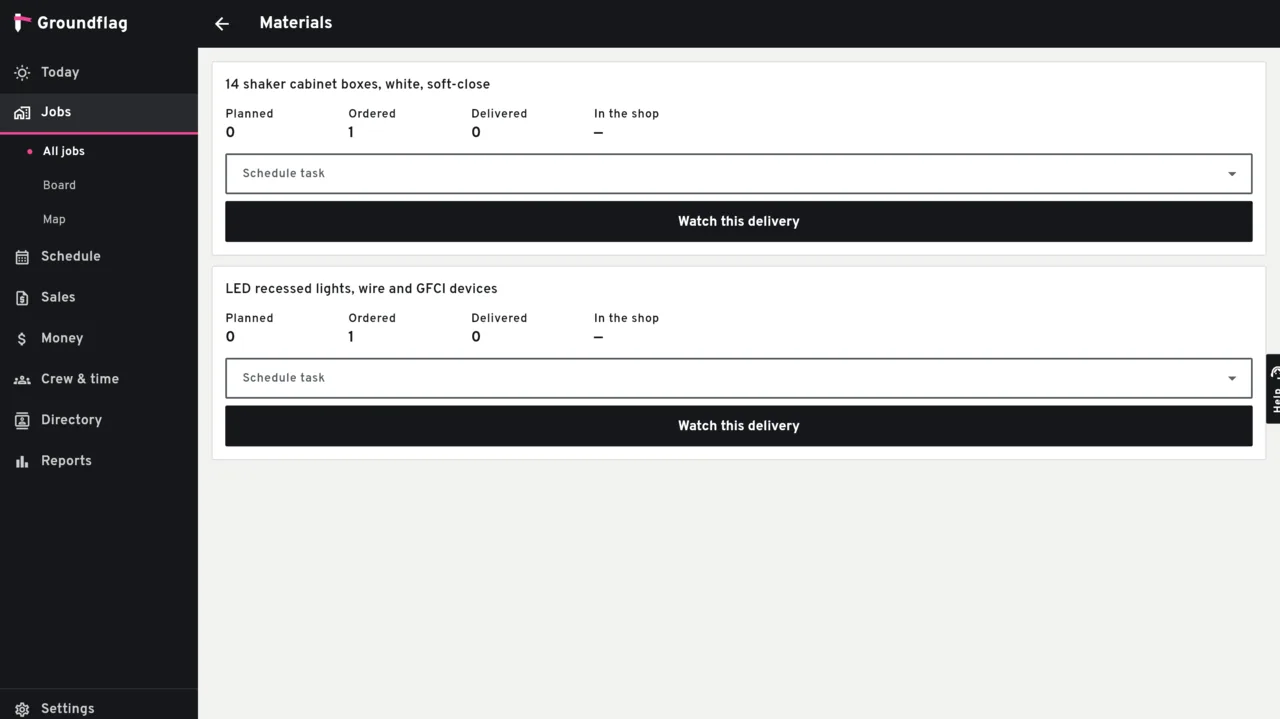
The job board
Warehouse is blank when you do not know.
Stock is the product's quantity on hand when the line has a product. No product means unknown, not zero.
Late only against a task.
A line is late when a schedule task it is tied to has started and delivered is still under what the job needs. A purchase-order date on its own does not light the warning.
The old materials list stays.
The list the CRM already uses is still that list. This board is a separate read of the same job.
The fleet is not the customer's gear
Company equipment is owned or rented, and the screen shows whether it is back, on a job, or free. Gear at the customer's address stays a different record. Hours reach job cost only if the company turns that setting on and confirms it on screen. The setting is off until then. Those hours do not enter labor hours, so they do not trip an over-hours warning on the labor budget. There is no location feed from Samsara, John Deere or CAT. Open both screens from the two buttons on the job Money tab.
Questions
Does a damaged receipt count as delivered?
No. Only a receipt in good condition counts. If there is no receipt record, the received quantity on the order is used, and the two are not added together.
Does turning equipment hours on happen by itself?
No. Someone confirms it on screen. Cancel leaves the setting as it was.
Keep reading
Questions? Write to hello@groundflag.com